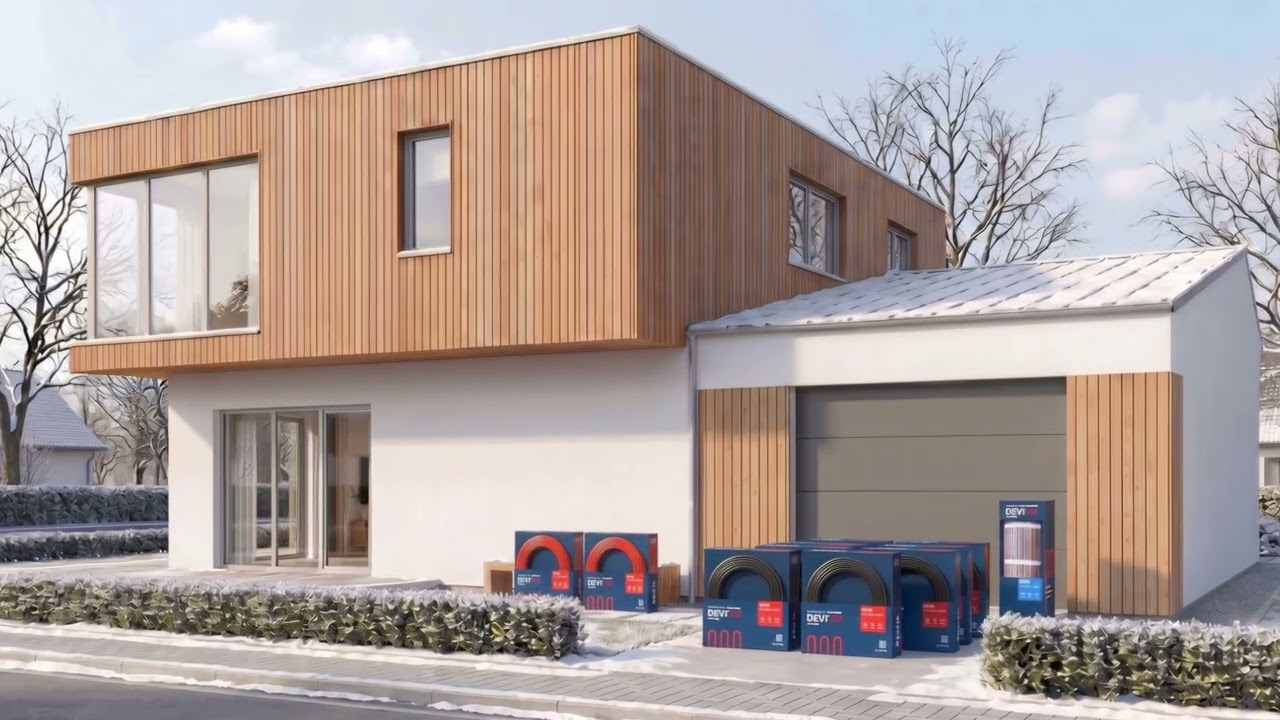
Roof ice & snow protection
Snow and ice melting electric heating systems

Benefits
- Supports the management of snow and ice accumulation in roof drainage areas and selected roof surfaces
- Contributes to maintaining the operation of gutters and downpipes during winter conditions, depending on system design and environmental conditions
- Can reduce the need for manual snow and ice removal in selected roof areas
- Designed for integration into residential, commercial and infrastructure projects
- Supports winter maintenance strategies for roof and drainage systems
- Can be incorporated into projects where snow loads and ice accumulation are considered in the overall building design
- Compatible with automatic control systems using temperature and moisture sensors
- Heating cables available with up to a 20-year warranty, subject to the applicable warranty terms and conditions
Product groups
Choose a product group to see more details and documents
Heating cables, mats and thermostats
| Product group | Heating cables | Heating mats | Frost protection - antennas / wires | Roofs and gutters | Asphalt (mastic) - high temperature | Asphalt - low temperature | Pavements, roads and ramps |
|---|---|---|---|---|---|---|---|
| DEVIsafe™ 20T - 230V | |||||||
| DEVIsnow™ 20T - 230 V & 400 V | |||||||
| DEVIsnow™ 30T - 230 V & 400 V | |||||||
| DEVIsnow™ 300T - 230 V & 400 V | |||||||
| DEVIsnow™ Drum Goods | |||||||
| DEVIasphalt™ 30T | |||||||
| DEVIasphalt™ 300T - 230 V & 400 V | |||||||
| DEVIiceguard™ 18 (T) Ready-made | |||||||
| DEVIiceguard™ 18 (T) Drum Goods | |||||||
| DEVIiceguard™ 18 (B) Drum Goods | |||||||
| DEVIreg™ 316 | |||||||
| DEVIreg™ 330 (-10 °C - +10 °C) | |||||||
| DEVIreg™ 330 (5 °C - 45 °C) | |||||||
| DEVIreg™ 610 | |||||||
| DEVIreg™ 850 IV | |||||||
| DEVIreg™ Multi |
Case stories
Read about our experience in real-life solutions
Snow and ice protection for a glass pyramid roof in Bonn.
DEVI solutions safeguard architectural design, safety, and structural integrity all winter long.

Winter safety at Europe’s tallest heights.
DEVI snow and ice melting solutions protect Varso Tower’s structures, people, and operations all year round.

Roof heating systems for old castle Orebro
The Örebro Castle is a medieval castle fortification situated in the scenic region...

FAQs
-
A roof ice and snow protection system uses electric heating cables installed in gutters, downpipes and selected roof areas.
The system is typically combined with temperature and moisture sensors connected to a control unit. When environmental conditions match the programmed operating parameters, the control system activates the heating cables. The generated heat supports temperature management in drainage areas and locations exposed to snow and ice accumulation.System performance depends on factors such as roof construction, local weather conditions, control settings, sensor placement and installation design.Automatic operation allows the system to respond according to configured environmental conditions, reducing the need for manual intervention. -
- Supports management of snow and ice accumulation in roof drainage areas
- Assists operation of gutters and downpipes during winter conditions
- Reduces the need for manual snow and ice removal in selected roof areas
- Can be integrated into both new-build and renovation projects
- Automated control options available through compatible controllers and sensors
- Suitable for a variety of building types and roof structures -
A roof ice and snow protection system is an electric heating solution designed for roofs, gutters, downpipes and drainage areas that are exposed to winter conditions. The system typically uses heating cables installed in critical areas where snow, ice or meltwater may accumulate. Combined with controllers and sensors, the system supports the operation of roof drainage systems during periods of low temperatures.
-
Heated gutters use heating cables installed inside gutters and downpipes to provide controlled heat along the drainage path. The system can be connected to controllers and temperature or moisture sensors that monitor environmental conditions and manage system operation according to predefined settings.System design is tailored to factors such as roof geometry, gutter dimensions, local climate conditions and project requirements.
-
There is no single roof de-icing solution that is suitable for every building.The most appropriate system depends on:
- Roof design and construction
- Gutter and drainage layout
- Local weather conditions
- Building use and accessibility requirements
- Control strategy and level of automation
- Installation and maintenance considerations
For many commercial and residential projects, heating cables combined with dedicated controllers and temperature/moisture sensors are specified to provide automated operation based on project requirements. -
Modern gutter heating systems can be combined with controllers and environmental sensors that monitor temperature and moisture conditions. These controls allow system operation to be based on predefined settings and site conditions rather than continuous operation.Actual energy consumption depends on factors such as climate, system design, roof configuration, operating parameters, installation size and weather conditions throughout the season.
-
Heating cables can be incorporated into roof de-icing systems designed to manage snow and ice accumulation in specific roof areas, including gutters, downpipes, eaves and roof valleys. Their performance depends on factors such as system design, installed capacity, roof construction, weather conditions and correct installation.For roof ice protection projects, heating cables should be selected and dimensioned according to the specific application and local climatic conditions.
Documents
Videos
Videos