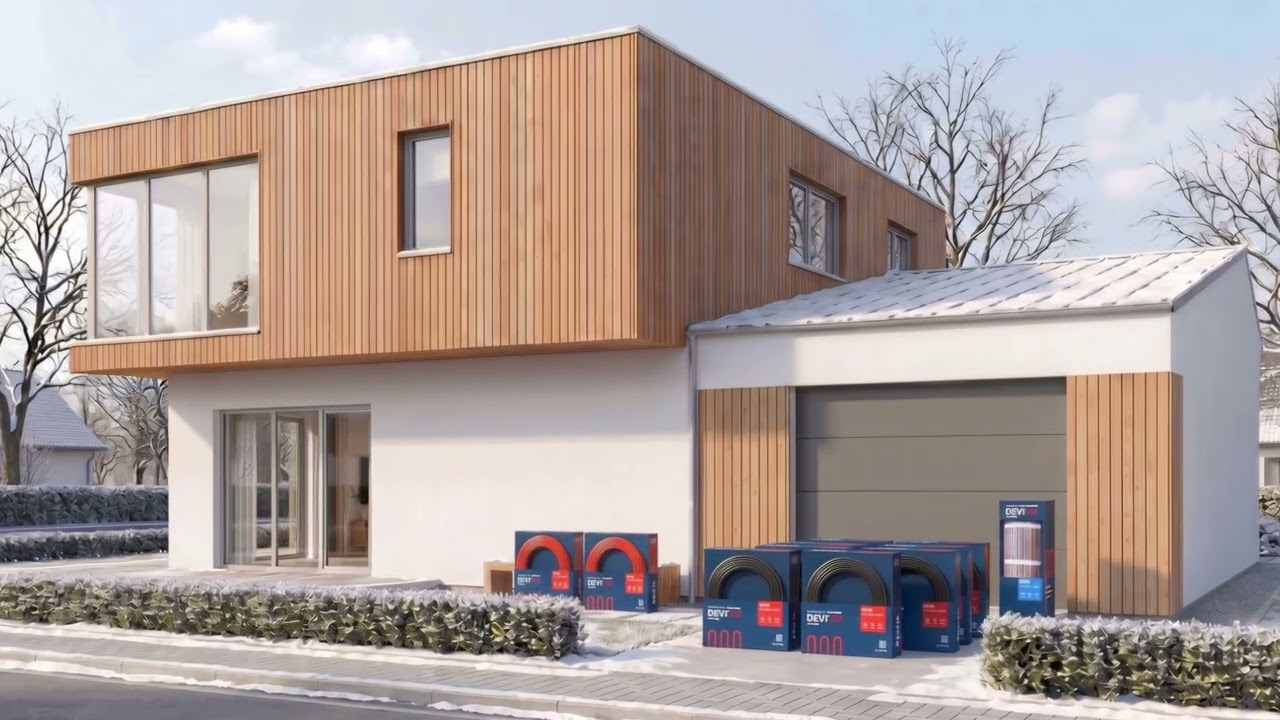
DEVI keeps truck wharfs clear at Warsaw Waste Plant.
Ground ice and snow melting system
DEVI provides electric snow-melting systems using heating cables, heating mats and automatic controls that can be installed beneath outdoor surfaces to help manage snow and ice accumulation across residential, commercial and infrastructure applications.
Modern buildings often incorporate technical systems designed to support the management of outdoor surfaces during winter conditions. Electric heating systems can be integrated into parking areas, driveways, walkways, stairs, loading platforms, ramps and other exposed surfaces where snow and ice accumulation may occur.
DEVI snow melting systems use heating cables and heating mats use installed beneath the surface as part of the overall site design. The system can be combined with temperature and moisture sensors/thermostats to support automatic operation, depending on the installation configuration and environmental conditions.
These outdoor heating solutions are used in residential, commercial and infrastructure projects where year-round accessibility and surface management are important design considerations.
Typical Applications: parking areas, driveways, walkways and pavements, outdoor stairs, access ramps, loading platforms, commercial entrances, infrastructure surfaces.

Benefits
- Electric heating system integrated beneath the surface
- Suitable for a variety of outdoor applications
- Compatible with automatic control systems and environmental sensors
- Available for residential, commercial and infrastructure projects
- Designed for operation according to configured temperature and moisture settings
- Supports integration into new-build and renovation projects
- Heating cables/mats available with a 20-year warranty in accordance with the manufacturer's warranty conditions
Product groups
Choose a product group to see more details and documents
Heating cables, mats and thermostats
| Product group | Heating cables | Heating mats | Frost protection - antennas / wires | Roofs and gutters | Asphalt (mastic) - high temperature | Asphalt - low temperature | Pavements, roads and ramps |
|---|---|---|---|---|---|---|---|
| DEVIsafe™ 20T - 230V | |||||||
| DEVIsnow™ 20T - 230 V & 400 V | |||||||
| DEVIsnow™ 30T - 230 V & 400 V | |||||||
| DEVIsnow™ 300T - 230 V & 400 V | |||||||
| DEVIsnow™ Drum Goods | |||||||
| DEVIasphalt™ 30T | |||||||
| DEVIasphalt™ 300T - 230 V & 400 V | |||||||
| DEVIiceguard™ 18 (T) Ready-made | |||||||
| DEVIiceguard™ 18 (T) Drum Goods | |||||||
| DEVIiceguard™ 18 (B) Drum Goods | |||||||
| DEVIreg™ 316 | |||||||
| DEVIreg™ 330 (-10 °C - +10 °C) | |||||||
| DEVIreg™ 330 (5 °C - 45 °C) | |||||||
| DEVIreg™ 610 | |||||||
| DEVIreg™ 850 IV | |||||||
| DEVIreg™ Multi |
Case stories
Read about our experience in real-life solutions
Winter safety without compromise
Safe, slip-free access all winter long in the Italian Alps.

Safe, Snow-Free Outdoor Areas for Les Petits Poucets Nursery
Safe, snow-free outdoor areas without salt or shoveling.

Safe, ice-free operations all winter.

Solution for a Safe Driveway in Winter
Ensuring safe and effortless access to their garage and house during winter.

Baroque palace in Kyiv
Designed by Bartolomeo Rastrelli in the second half of the 18th-century.

Historic Landmark Transformed into a Modern Hotel
Bunker IV in Hamburg has been transformed into a multi-purpose facility.

FAQs
-
DEVI outdoor heating systems can be incorporated as part of a winter surface management strategy, helping operators manage snow and ice on frequently used exterior surfaces.The system can be designed according to: surface type, climate conditions, site layout, traffic intensity, project-specific requirements
-
A snow melting system is an electric heating solution designed for outdoor surfaces such as driveways, pavements, ramps, loading areas, steps and parking facilities. The system typically consists of heating cables or heating mats installed beneath the surface and controlled by dedicated controllers and sensors.Snow melting systems are used in residential, commercial and public infrastructure projects where managing snow and ice accumulation forms part of the design requirements.
-
A heated driveway uses electric heating cables installed beneath the driveway surface. The cables are connected to a control system that may include temperature and moisture sensors.Depending on the system design and control settings, the installation can operate automatically or manually. The heating elements provide heat beneath the surface, supporting snow and ice management during winter conditions.
-
Modern snow melting systems can be combined with dedicated controllers and sensors that monitor temperature and moisture conditions. These controls allow system operation to be based on predefined parameters and site conditions rather than continuous operation.Energy consumption depends on factors such as climate, installation size, control strategy, operating settings and the duration of winter weather events.
-
Electric snow and ice management systems are designed to support the management of snow and ice accumulation on outdoor surfaces. Their performance depends on system design, installed capacity, weather conditions, control settings and proper installation.For each project, the heating solution should be selected and dimensioned according to the specific application and local climatic conditions.
-
Operating costs vary significantly depending on:
- The size of the heated area
- Local electricity prices
- Climate and winter conditions
- Operating hours
- Control strategy
- Insulation and construction details
Because these factors vary from project to project, operating costs should be assessed during the design phase using local energy prices and application-specific operating assumptions. -
There is no single solution that is suitable for every commercial project.The most appropriate snow melting system depends on:
- Surface type (concrete, asphalt, paving, etc.)
- Area size
- Traffic load requirements
- Local climate conditions
- Building operation requirements
- Control and automation preferences
For commercial applications, heating cables combined with dedicated snow and ice controllers and moisture sensors are commonly specified to support automated system operation and project-specific performance requirements. -
Yes. Heated pavement systems can be incorporated into renovation and refurbishment projects, provided that the surface construction allows installation of heating elements and associated electrical infrastructure.The suitability of a retrofit solution depends on factors such as the existing surface construction, available installation depth, power supply capacity and project requirements. A site-specific assessment is recommended before selecting the system design.